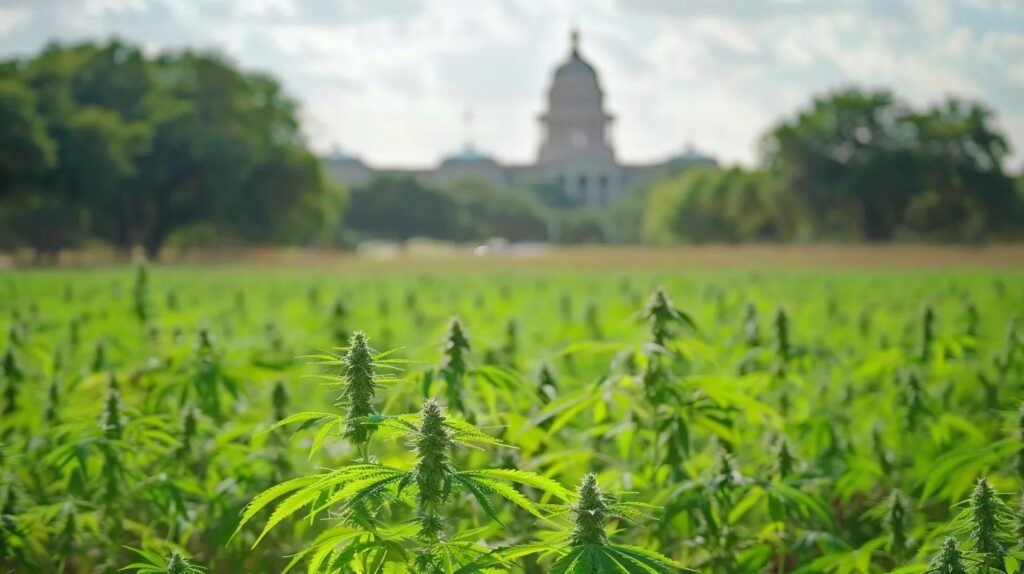
What Just Happened to Your Hemp?
Picture this. You’re a Texas hemp business owner. You just survived one of the toughest political battles in state history. Lt. Gov. Dan Patrick tried three separate times to ban all hemp-derived tetrahydrocannabinol (THC) products in Texas. Three times, he pushed. Three times, he failed. Governor Greg Abbott even vetoed the ban. You thought the fight was over. Then, out of nowhere, the federal government slipped a nationwide hemp restriction into a budget bill, and just like that, the Texas hemp THC ban became a real national conversation again.
So, what exactly happened? And, more importantly, what does it mean for you as a consumer or a business owner who loves the benefits of hemp? At Joint Vibe Cannabis Co, we believe you deserve the full story, delivered clearly and honestly. So let’s break it all down together.
First, Let's Talk About the 2018 Farm Bill
To understand what’s going on right now, you need to know where this whole thing started. Back in 2018, Congress passed a big agriculture law called the Agriculture Improvement Act of 2018, also known as the 2018 Farm Bill. That law did something huge: it made hemp legal at the federal level.
But here’s the key detail. The law defined hemp as the cannabis plant with no more than 0.3% of a compound called delta-9 tetrahydrocannabinol (THC) by dry weight. That tiny number opened the door for an entire industry to bloom, including products like:
• Tetrahydrocannabinolic acid (THCA) flower
• Delta-8 tetrahydrocannabinol (THC) products
• Delta-10 tetrahydrocannabinol (THC) gummies
• Cannabidiol (CBD) oils and tinctures
Now, fast-forward to 2025. Texas became ground zero for the biggest battle over those products the country has ever seen.
Texas Said 'No' to the Ban... Then Washington Said 'Hold On'
Here’s where things get really interesting. In 2025, the Texas Senate, led by Dan Patrick, passed Senate Bill 3, which would have banned all hemp-derived THC products in the state. Supporters argued that synthetic cannabinoids were dangerous, especially for kids. They made a strong case. For months, it seemed like the ban was unstoppable.
Then came one of the most powerful moments in Texas hemp history. During a massive public hearing, veterans, patients, and everyday Texans testified for over 14 straight hours about how hemp products had changed their lives for the better. The message was loud and clear, and Governor Abbott heard it. He vetoed Senate Bill 3.
Then, he called two special legislative sessions to try to craft compromise regulations instead of an outright ban. The legislature couldn’t agree on a final plan. So, Abbott issued an executive order telling state agencies to enforce age restrictions on hemp sales. Texas found its middle ground.
At least, it thought it did. Because while all of that was happening in Austin, something was brewing in Washington, D.C.
The Federal Government Shutdown Deal That Changed Everything
In November 2025, the U.S. was dealing with the longest federal government shutdown in history. Congress needed a deal fast. To end the shutdown, lawmakers put together a massive spending bill called the Continuing Appropriations, Agriculture, Legislative Branch, Military Construction and Veterans Affairs, and Extensions Act, 2026, also known as H.R. 5371.
Hidden inside that very long bill was a short but powerful section that rewrote the definition of hemp. Senator Mitch McConnell, the same senator who had championed hemp legalization in 2018, inserted language that dramatically changed the rules. Under this new law:
1. Hemp products will now be measured by total THC concentration, not just delta-9 concentration.
2. The new legal limit is 0.4% total THC, which covers all THC types combined, including THCA.
3. Products that do not meet this stricter standard will be banned from sale.
4. The ban takes effect on November 12, 2026, giving the industry exactly one year to adjust.
5. Within 90 days of the bill signing, the Food and Drug Administration (FDA) must publish updated lists of cannabinoids.
President Trump signed the bill into law on November 13, 2025, officially ending the shutdown and officially beginning the clock on the Texas hemp THC ban and its nationwide equivalent.
What Products Are Affected? A Quick Breakdown
Here’s a simple table to show you what might still be legal and what will likely face problems after November 2026:
| Product Type | Status After Nov. 2026 Under Federal Law |
|---|---|
| THCA Flower | Likely banned (THCA counts toward total THC) |
| Delta-8 THC Gummies | Likely banned (synthetic THC isomer) |
| Delta-10 THC Products | Likely banned (synthetic THC isomer) |
| CBD Oil (0% THC) | Likely still legal |
| Cannabigerol (CBG) Products | Likely still legal |
| Low-THC Hemp Products (<0.4% total) | Potentially legal, pending FDA guidance |
Note: Final product legality depends on FDA clarification expected in early 2026.
What Does 'Extinction-Level Event' Really Mean?
When economists started calling this a possible ‘extinction-level event’ for the hemp industry, that’s not just dramatic language. That’s a serious warning. So, let’s put it in real terms.
The Texas hemp industry grew rapidly after the 2018 Farm Bill. Hemp-derived products became a major source of income for farmers, retailers, and small businesses all across the Lone Star State. Thousands of jobs were created. Entire communities in places like Lubbock, the Hill Country, and the Gulf Coast developed real economic roots in hemp.
Now, consider what happens if the ban goes into full effect in November 2026:
• Up to 99% of current hemp products could be pulled from shelves.
• Retailers selling THCA flower, delta-8 products, and similar items face closure.
• Hemp farmers lose a major crop revenue stream.
• Consumers lose access to products that many rely on for wellness and relaxation.
• Texas could lose hundreds of millions in economic activity.
However, there is some hope on the horizon. And that’s worth talking about too.
The Fight Isn't Over: Here's What's Happening Right Now
Even though the law has been signed, the hemp industry is not giving up without a fight. In fact, some really encouraging things are happening at both the state and federal levels. Here’s what’s actively in motion:
6. A bipartisan group of lawmakers from South Carolina, Kentucky, California, and Indiana has introduced a bill to repeal the federal ban entirely.
7. The Texas Hemp Business Council is working with congressional allies and state officials to find regulatory solutions that protect public safety AND the market.
8. Texas itself is moving toward a regulation model rather than an outright ban, which could create a state-level buffer even if the federal rules change.
9. Industry advocates are pushing for a framework that includes federal testing, proper labeling, and strict age restrictions, rather than a blanket ban.
As a result, the next 12 months are going to be incredibly important. The decisions made between now and November 2026 will shape what the hemp market looks like for the next decade. That’s why staying informed matters so much right now.
[IMAGE 3: A person holding hemp flower with a hopeful expression. Caption: ‘The community is pushing back, and the conversation isn’t over yet.’]
What This Means for Joint Vibe Customers
Here at Joint Vibe Cannabis Co, our entire mission is built around trust, transparency, and your experience. We’ve always believed that hemp done right, which means organically grown, lab-tested, and responsibly labeled, deserves a legal place in the market. That belief hasn’t changed one bit.
So, what are we doing about all of this? For starters, we’re watching every development closely. We’re making sure every single batch we offer comes with a full Certificate of Analysis (COA), so you always know exactly what you’re buying. We’re also making sure our products comply with all current federal and state guidelines.
Beyond that, here’s what we want you to know as our customer:
• Nothing changes for you right now. All current products remain legal until November 2026 at the earliest.
• We will communicate any changes well in advance, clearly and honestly.
• Our team is here to answer your questions whenever you need guidance.
• We are committed to finding compliant, high-quality alternatives if and when they are needed.
In other words, we’ve got your back. That’s what community-first means to us.
Frequently Asked Questions
Can I still buy THCA flower and delta-8 products today?
Yes, absolutely. As of right now, nothing has changed. All hemp-derived products that were legal before the bill was signed remain legal until the new federal rules take effect on November 12, 2026. So you have time, and we will keep you updated every step of the way.
If I live in Texas, do the state and federal rules now conflict?
That’s a great question, and the honest answer is: it’s complicated. Texas chose a regulation path rather than a ban, but once the federal definition takes effect, federal law generally overrides state law in these matters. Think of it like the situation with recreational marijuana in some states, the state may allow it, but federal law still technically prohibits it. Legal experts and lawmakers are actively working through how this will shake out in practice.
Why did the hemp ban get added to a budget bill in the first place?
Budget bills are sometimes used to pass measures that might not survive on their own. Senator McConnell, who originally championed hemp in 2018, believed that closing what critics called the ‘hemp loophole’ was important for public safety. The urgency of ending the government shutdown created an opening to include the language, and it moved through quickly as a result.
Will Joint Vibe Cannabis Co still be able to ship to me?
Our goal is to always keep you covered. Right now, we continue to ship safely, discreetly, and quickly to your door. If anything changes, we will reach out to let you know before it affects your order. Your experience and your trust are our top priorities.
What can I do to help fight the federal hemp ban?
Your voice matters more than you might think. You can contact your local representative, sign petitions organized by groups like the Texas Hemp Business Council, and share accurate information with friends and family who use hemp products. Grassroots advocacy is exactly what helped defeat the state-level ban in Texas, and that same energy can work at the federal level too.
The Bottom Line: Stay Vibed, Stay Informed
The Texas hemp THC ban situation is one of the most important stories in the cannabis world right now. What started as a state fight became a national one almost overnight. And even though the road ahead has some uncertainty, one thing is absolutely clear: the hemp community is strong, organized, and not going quietly.
At Joint Vibe Cannabis Co, we’ve always been here to elevate your journey, not just sell you products. That means keeping you educated, prepared, and connected to the community that has your best interests at heart. Whether you’re a long-time hemp lover or just getting started, we’re here to guide you through whatever comes next.
So stay curious. Stay informed. And above all, stay vibed.